


Web Sling Steel D-Ring Anchorage Connectors
Anchor Slings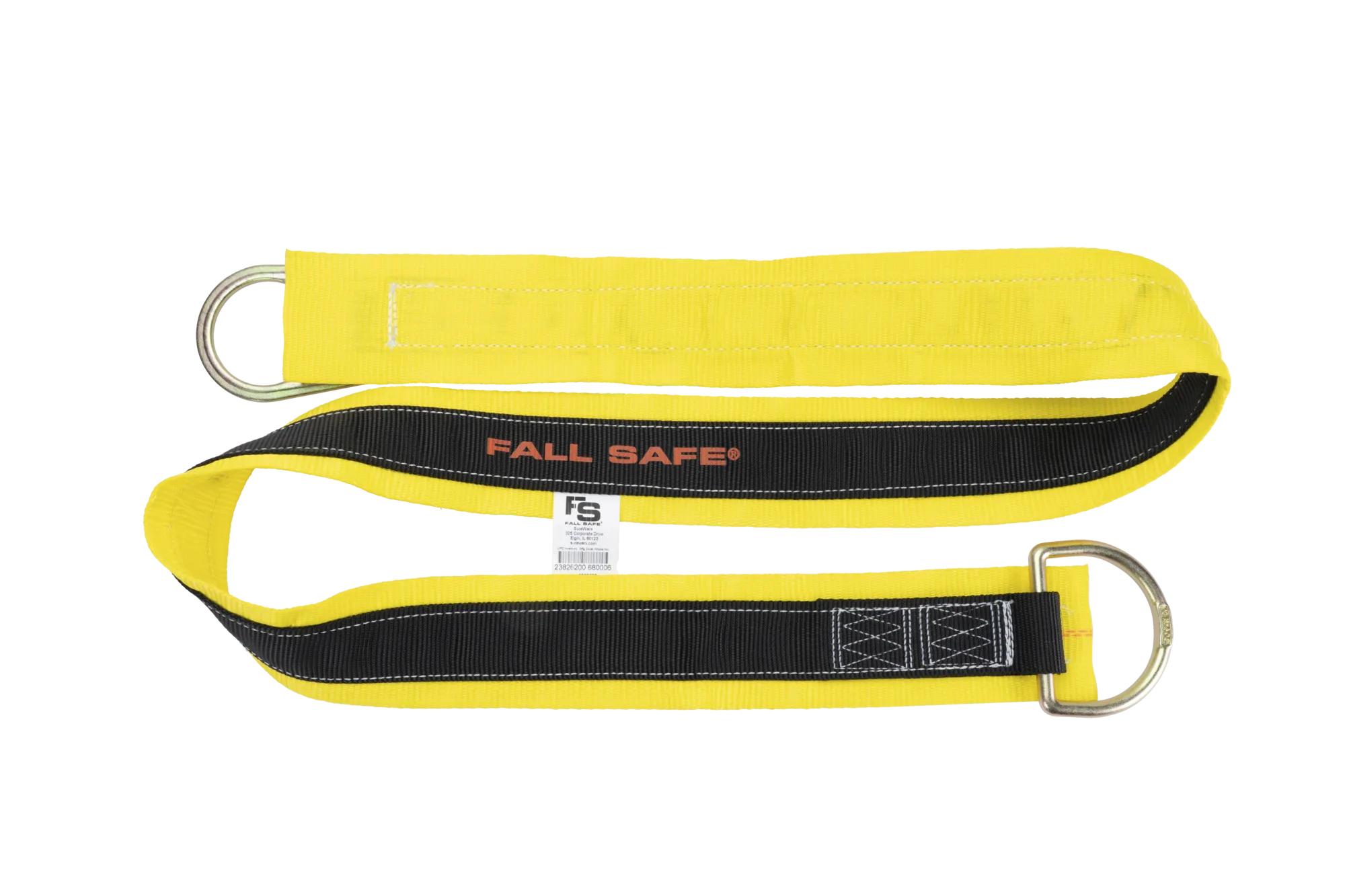
Web anchorage slings are constructed from heavy-duty, abrasion-resistant polyester webbing for long-lasting performance. Each sling features patented Tattletale™ wear-indicator webbing, making inspections fast and easy. Flexible, economical, and easy to reposition, these anchorage devices are available in multiple lengths to suit a variety of applications.
- Featuring Fall Safe's patented ‘Tattletale™’ webbing, making inspection quick and easy.
- Designed to withstand exposure to the harshest of work environments
Available Variations & Documents
- End Configuration
- Zinc Plated D-Ring
- Total Weight Capacity (lb.)
- 310
- Standards
- ANSI Z359.1, OSHA 1926.502
- Total Weight Capacity (kg.)
- 140
- Anchor Sling Length (ft.)
- 2
- Special Features
- TattleTale Webbing®
- Anchor Sling Length (m.)
- 0.6096
- Material
- Zinc Plated Steel
- Webbing
- Polyester
- Minimum Tensile Strength
- 7500
- Category
- Anchor Sling
- Application
- Temporary Fall Arrest Anchorage
- End Configuration
- Zinc Plated D-Ring
- Total Weight Capacity (lb.)
- 310
- Standards
- ANSI Z359.1, OSHA 1926.502
- Total Weight Capacity (kg.)
- 140
- Anchor Sling Length (ft.)
- 3
- Special Features
- TattleTale Webbing®
- Anchor Sling Length (m.)
- 0.9144
- Material
- Zinc Plated Steel
- Webbing
- Polyester
- Minimum Tensile Strength
- 7500
- Category
- Anchor Sling
- Application
- Temporary Fall Arrest Anchorage
- End Configuration
- Zinc Plated D-Ring
- Total Weight Capacity (lb.)
- 310
- Standards
- ANSI Z359.1, OSHA 1926.502
- Total Weight Capacity (kg.)
- 140
- Anchor Sling Length (ft.)
- 4
- Special Features
- TattleTale Webbing®
- Anchor Sling Length (m.)
- 1.2192
- Material
- Zinc Plated Steel
- Webbing
- Polyester
- Minimum Tensile Strength
- 7500
- Category
- Anchor Sling
- Application
- Temporary Fall Arrest Anchorage
- End Configuration
- Zinc Plated D-Ring
- Total Weight Capacity (lb.)
- 310
- Standards
- ANSI Z359.1, OSHA 1926.502
- Total Weight Capacity (kg.)
- 140
- Anchor Sling Length (ft.)
- 5
- Special Features
- TattleTale Webbing®
- Anchor Sling Length (m.)
- 1.524
- Material
- Zinc Plated Steel
- Webbing
- Polyester
- Minimum Tensile Strength
- 7500
- Category
- Anchor Sling
- Application
- Temporary Fall Arrest Anchorage
- End Configuration
- Zinc Plated D-Ring
- Total Weight Capacity (lb.)
- 310
- Standards
- ANSI Z359.1, OSHA 1926.502
- Total Weight Capacity (kg.)
- 140
- Anchor Sling Length (ft.)
- 6
- Special Features
- TattleTale Webbing®
- Anchor Sling Length (m.)
- 1.8288
- Material
- Zinc Plated Steel
- Webbing
- Polyester
- Minimum Tensile Strength
- 7500
- Category
- Anchor Sling
- Application
- Temporary Fall Arrest Anchorage
- End Configuration
- Zinc Plated D-Ring
- Total Weight Capacity (lb.)
- 310
- Standards
- ANSI Z359.1, OSHA 1926.502
- Total Weight Capacity (kg.)
- 140
- Anchor Sling Length (ft.)
- 8
- Special Features
- TattleTale Webbing®
- Anchor Sling Length (m.)
- 2.4384
- Material
- Zinc Plated Steel
- Webbing
- Polyester
- Minimum Tensile Strength
- 7500
- Category
- Anchor Sling
- Application
- Temporary Fall Arrest Anchorage
- End Configuration
- Zinc Plated D-Ring
- Total Weight Capacity (lb.)
- 310
- Standards
- ANSI Z359.1, OSHA 1926.502
- Total Weight Capacity (kg.)
- 140
- Anchor Sling Length (ft.)
- 10
- Special Features
- TattleTale Webbing®
- Anchor Sling Length (m.)
- 3.048
- Material
- Zinc Plated Steel
- Webbing
- Polyester
- Minimum Tensile Strength
- 7500
- Category
- Anchor Sling
- Application
- Temporary Fall Arrest Anchorage
- End Configuration
- Zinc Plated D-Ring
- Total Weight Capacity (lb.)
- 310
- Standards
- ANSI Z359.1, OSHA 1926.502
- Total Weight Capacity (kg.)
- 140
- Anchor Sling Length (ft.)
- 12
- Special Features
- TattleTale Webbing®
- Anchor Sling Length (m.)
- 3.6576
- Material
- Zinc Plated Steel
- Webbing
- Polyester
- Minimum Tensile Strength
- 7500
- Category
- Anchor Sling
- Application
- Temporary Fall Arrest Anchorage
- End Configuration
- Zinc Plated D-Ring
- Total Weight Capacity (lb.)
- 310
- Standards
- ANSI Z359.1, OSHA 1926.502
- Total Weight Capacity (kg.)
- 140
- Anchor Sling Length (ft.)
- 14
- Special Features
- TattleTale Webbing®
- Anchor Sling Length (m.)
- 4.2672
- Material
- Zinc Plated Steel
- Webbing
- Polyester
- Minimum Tensile Strength
- 7500
- Category
- Anchor Sling
- Application
- Temporary Fall Arrest Anchorage
- End Configuration
- Zinc Plated D-Ring
- Total Weight Capacity (lb.)
- 310
- Standards
- ANSI Z359.1, OSHA 1926.502
- Total Weight Capacity (kg.)
- 140
- Anchor Sling Length (ft.)
- 20
- Special Features
- TattleTale Webbing®
- Anchor Sling Length (m.)
- 6.096
- Material
- Zinc Plated Steel
- Webbing
- Polyester
- Minimum Tensile Strength
- 7500
- Category
- Anchor Sling
- Application
- Temporary Fall Arrest Anchorage
- End Configuration
- Zinc Plated D-Ring
- Total Weight Capacity (lb.)
- 310
- Standards
- ANSI Z359.1, OSHA 1926.502
- Total Weight Capacity (kg.)
- 140
- Anchor Sling Length (ft.)
- 1.25
- Special Features
- TattleTale Webbing®
- Anchor Sling Length (m.)
- 0.381
- Material
- Zinc Plated Steel
- Webbing
- Polyester
- Minimum Tensile Strength
- 7500
- Category
- Anchor Sling
- Application
- Temporary Fall Arrest Anchorage
Frequently Asked Questions
An anchorage connector is the device that links a connecting device, such as a shock-absorbing lanyard or self-retracting lifeline (SRL), to an anchorage: the beam, column, roof or other structure that holds the load if a worker falls. Common examples include web and cable slings, I-beam clamps and trolleys, and fixed anchors that are bolted, welded or set into concrete. The anchorage connector is one part of a complete personal fall arrest system, along with a full body harness and a connecting device. Every component must be compatible with the others and rated for the work being done.
Under OSHA, an anchorage used for personal fall arrest must support at least 5,000 lb for each worker attached, or be designed, installed and used as part of a complete system with a safety factor of at least two, under the supervision of a qualified person (29 CFR 1926.502(d)(15) for construction and 1910.140(c)(13) for general industry). In construction, anchorages for positioning systems must support at least 3,000 lb or twice the potential impact load, whichever is greater (29 CFR 1926.502(e)(2)). Both the anchorage connector and the structure it's attached to must meet the requirement. Check the rating on the product label, and have a qualified person confirm the structure.
Start with the structure you're tying off to and whether the anchor needs to stay in place:
Anchor slings (web or cable) wrap around beams, columns and other structural members. They're portable and easy to move between jobs.
I-beam anchors clamp onto a steel beam flange. Trolley and slider styles let the worker travel along the beam. Check the anchor's flange width range against your beam before ordering.
Fixed steel anchors are bolted, welded or pushed through a structure to create a permanent tie-off point.
Concrete anchors are set into concrete to create an anchor point that stays in place.
Remote-connect systems let you attach an anchor to an overhead beam or receiver from the ground with a pole, before anyone is exposed to a fall.
For permanent installations, have a qualified person confirm the structure can carry the load.
Only if both the anchorage connector and the structure are rated for more than one user. OSHA requires an anchorage to support 5,000 lb for each attached worker, so an anchor shared by two workers generally needs to support 10,000 lb, unless a qualified person has engineered the system with a safety factor of at least two (29 CFR 1926.502(d)(15)). Many slings and beam anchors are rated for a single user, while some overhead beam grips and concrete anchor systems are rated for two. Check the product label and user instructions for the number of users allowed. Never attach a second worker to an anchor rated for one.
OSHA sets the legal requirements for fall protection anchorages in the US. ANSI/ASSP Z359.18-2017 is the voluntary consensus standard for anchorage connectors used in active fall protection. It adds dynamic strength, residual strength, serviceability and corrosion testing, and it replaced the anchorage connector requirements in the older ANSI Z359.1-2007. The standard isn't retroactive, so connectors marked to Z359.1-2007 can remain in service. OSHA doesn't require ANSI compliance, but many employers, owners and job specifications do. Check the product label and Declaration of Conformity for the standards each anchorage connector meets.
Inspect anchorage connectors before each use for wear, cuts, corrosion, deformation, missing labels and other damage, and remove any defective connector from service (29 CFR 1926.502(d)(21) and 1910.140(c)(18)). ANSI Z359.2 also calls for a competent person to inspect fall protection equipment at least once a year, or more often if the manufacturer requires it. An anchorage connector that has arrested a fall must be removed from service immediately and can't be used again until a competent person confirms it's undamaged and suitable for reuse. Some web slings use wear-indicator webbing designed to make worn areas easier to spot during inspection.
No. At a junction where two horizontal I-beams cross, a fall could load the beam slider sideways (cross-loading), which it isn't designed to handle. Use a beam slider only along a straight run of a single beam within its rated flange width range, and follow the user instructions for installation.
Unsure what gear is right for your needs?
Our experienced team of Fall Safety experts can help.