


Remote Rescue Kit, Evak
Kits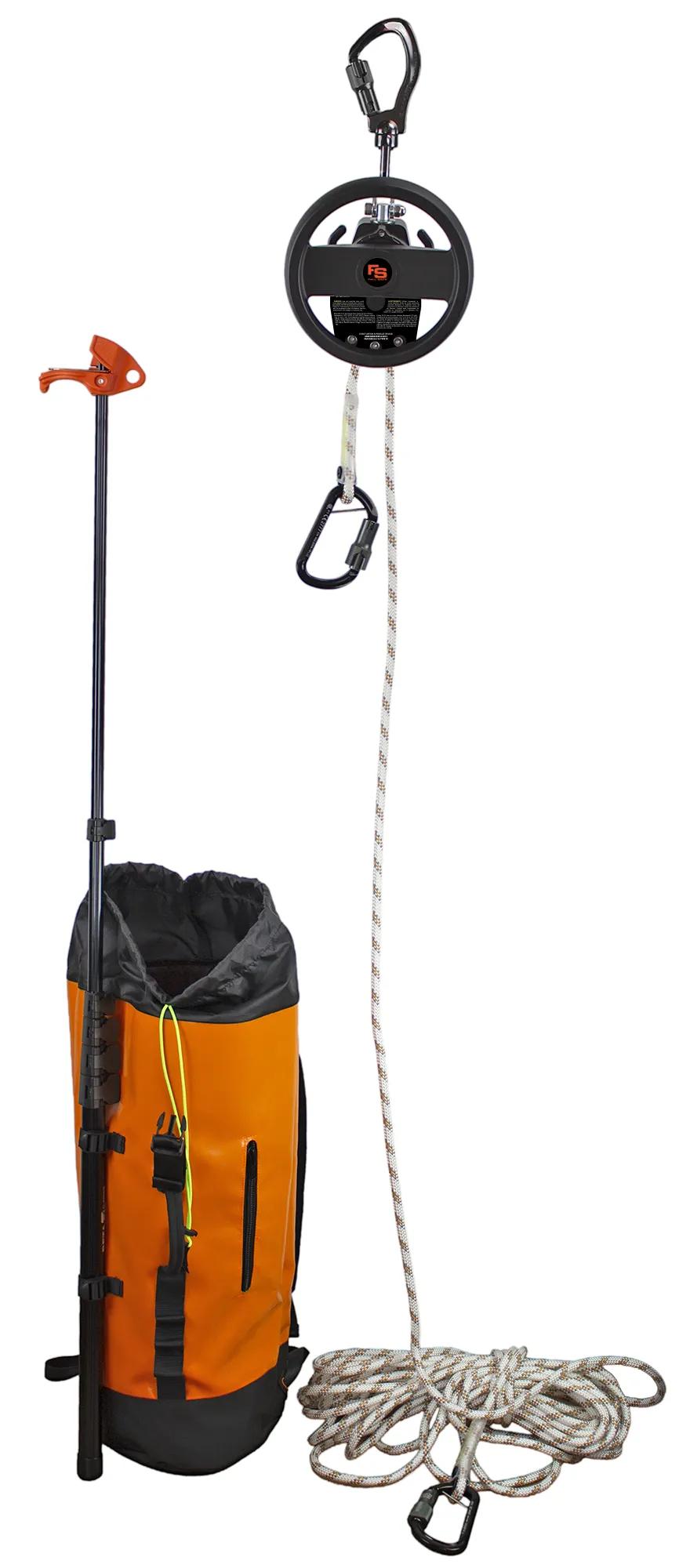
Rescue kit includes a controlled descent device with integrated lifting and reverse locking. When deployed, the centrifugal brake maintains a constant speed throughout the descent. This device also ensures that during a rescue, the victim only moves in an upward direction, preventing a potential fall. This kit comes neatly packaged in a lightweight and durable transport case.
- Capable of being deployed remotely
- Lightweight aluminum descent device with swivel carabiner
- Descent speed can be regulated up to 3.3 ft/s (1 m/s)
- Built with high-quality materials and components for product longevity and low maintenance
- 65 ft (20 m) with multiple lengths available up to 650 ft (200 m)
- Includes an anchor sling, aluminum carabiner, wheel descender, rescue pole and a vacuum sealed bag
- Capacity rating up to 310 lbs (140 kg)
Available Variations & Documents
- Warranty
- 1 Year Limited Commercial Warranty
- Standards
- ANSI Z359.4-2013, EN341:2011-2D
- Includes
- Controlled Descent Descender
- Storage Package
- Transport Case
- Lanyard Length (ft.)
- 65
- Lanyard Length (m.)
- 20
- [42318LanyardCapacityin]
- 310 lb
- Lanyard Capacity (kg)
- 140 kg
Frequently Asked Questions
OSHA requires employers to provide for the prompt rescue of workers after a fall, or to make sure workers can rescue themselves (29 CFR 1926.502(d)(20); 1910.140(c)(21)). In practice, meeting that requirement means having a rescue plan in place before work begins, one that identifies the equipment, procedures and trained rescuers you'll rely on.
OSHA doesn't set a maximum time, and there's no time that can be considered safe. Suspension trauma (orthostatic intolerance) can develop within minutes as blood pools in the legs, so a fallen worker needs to be rescued as quickly as possible. Suspension trauma straps can relieve pressure while the worker waits, but they don't replace a rescue plan.
An effective fall rescue plan identifies:
Rescue procedures for each work location
How to call for help and who to contact
The rescue equipment to be used
Trained rescuers and their responsibilities
Self-rescue options, where feasible
How the rescued worker will be treated and medically evaluated
The plan should be specific to the site and practiced regularly.
Start the site's rescue plan immediately. Bring the worker down as quickly as possible, because hanging in a harness can lead to suspension trauma (orthostatic intolerance), a serious medical condition. Don't rely on calling emergency services alone; they may not arrive in time or have the equipment to reach the worker. After rescue, have the worker evaluated by medical professionals.
Fall Safe suspension trauma straps come in a single pouch that attaches to the harness with a loop connection. After a fall, the worker deploys the straps and steps into them to take pressure off the legs while waiting for rescue.
Unsure what gear is right for your needs?
Our experienced team of Fall Safety experts can help.