


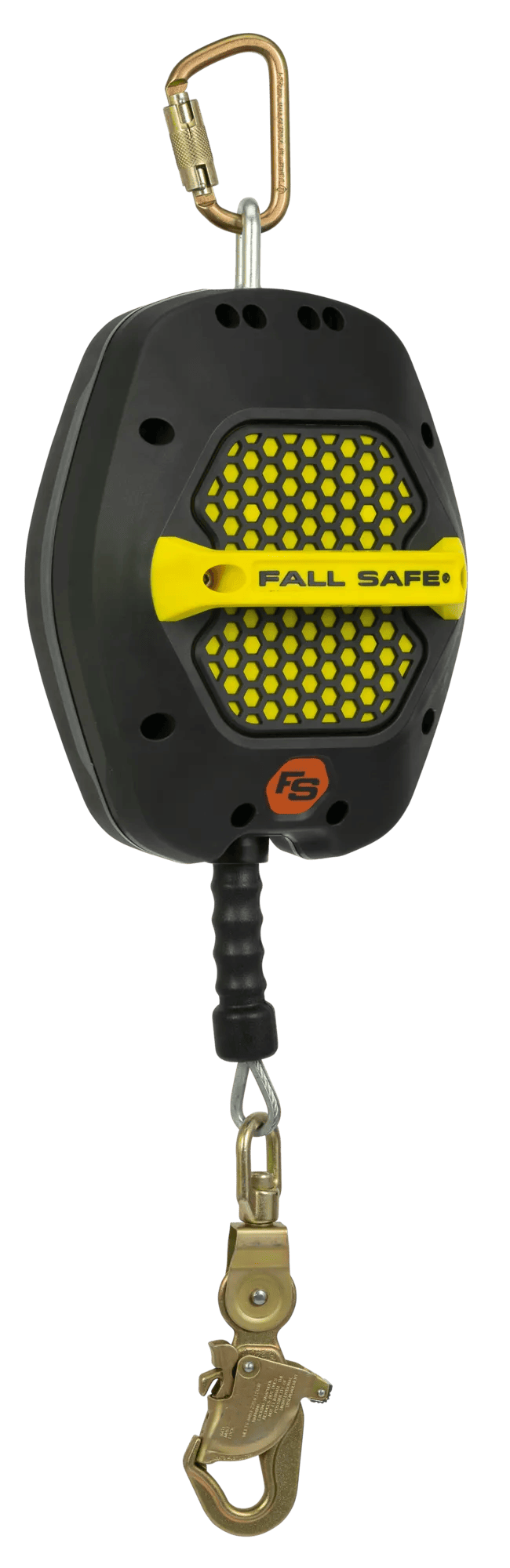
F.L.O
F.L.O.™ is the world's first self-retracting lifeline to feature dual motion detection sensing both velocity and acceleration. Unlike traditional devices that react to any quick motion, F.L.O.™ is smart enough to tell the difference between a fall and fast-paced work to deliver the perfect balance of safety, speed and productivity.
No More Lock-ups
Fall Safe introduces a novel solution to the fall protection industry with the Flexible Lifeline Optimization Self-Retracting Lifeline (F.L.O.). This innovative device addresses longstanding challenges in balancing worker safety and usability when working at height. By integrating dual-motion detection technology, which assesses both acceleration and velocity, the F.L.O. enhances lock-up efficiency compared to traditional self-retracting lifelines (SRLs).
Explore our F.L.O. products below or browse the full catalog of SRDs.
F.L.O Products
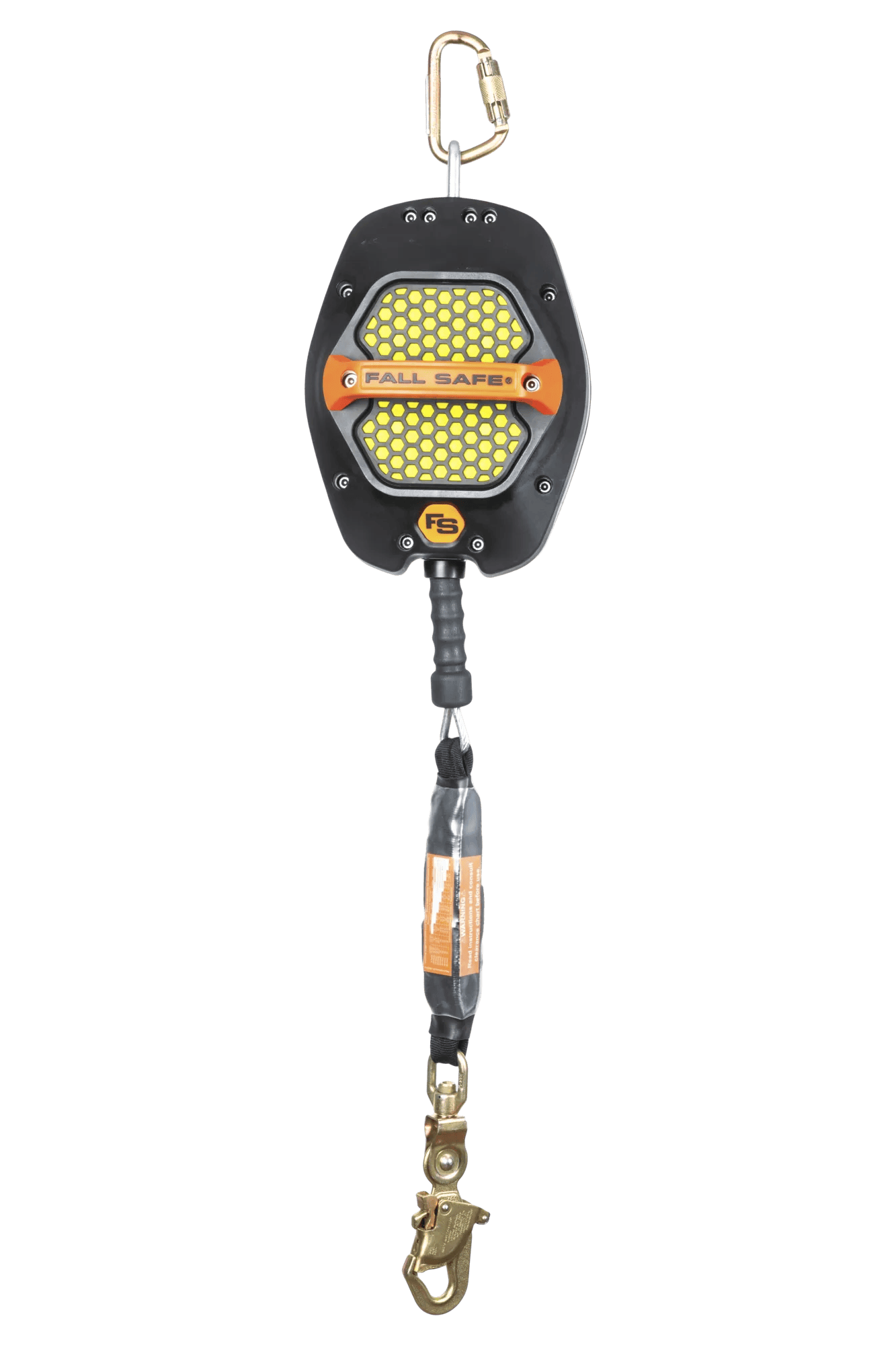
F.L.O. Leading Edge Self Retracting Devices, 30', Class 2
Frequently Asked Questions
The FLO (Flexible Lock Optimization) is a self-retracting lifeline for fall arrest at height. Its dual-motion locking system is designed to give workers more freedom of movement while still locking quickly in a fall. It comes in two versions:
Class 2 leading-edge models, which need as little as 4 ft of clearance when anchored overhead
Class 1 overhead models, with a maximum arrest force under 900 lb
Conventional SRLs lock when the lifeline pays out faster than a set speed. The FLO uses a dual-motion detection system that responds to both acceleration and velocity. This is designed to reduce the usual trade-off between mobility and safety: workers get fewer unintentional lock-ups during normal movement, and Class 2 models need less fall clearance. Class 1 models also keep maximum arrest force under 900 lb.
On Class 2 models, workers feel less drag from the lifeline and get fewer unintentional lock-ups, so the device is less of a nuisance to wear. These models still need as little as 4 ft of clearance when anchored overhead, which makes compliance easier to manage. Class 1 models keep maximum arrest force under 900 lb, which allows more anchorage options, including anchorages certified by a qualified person to 1,800 lb.
The FLO is used in construction, maintenance and other industries where workers face unprotected edges or limited clearance. Class 2 models meet ANSI Z359.14 leading-edge requirements, can be anchored below the dorsal D-ring and need as little as 4 ft of clearance when anchored overhead. That suits general-industry sites, where OSHA's fall protection trigger height is 4 ft. Class 1 models keep maximum arrest force under 900 lb.
FLO Class 2 models use a 7/32 in galvanized steel cable lifeline, and Class 1 models use 3/16 in galvanized steel cable. Some configurations use stainless steel cable or Dyneema rope instead. Check each model's specifications for its lifeline type.
The FLO meets OSHA 29 CFR 1926.502 (construction) and 1910.140 (general industry) and ANSI/ASSP Z359.14-2021. Class 2 models meet the standard's leading-edge requirements, and Class 1 models meet its overhead requirements. See each model's label and Declaration of Conformity for details.
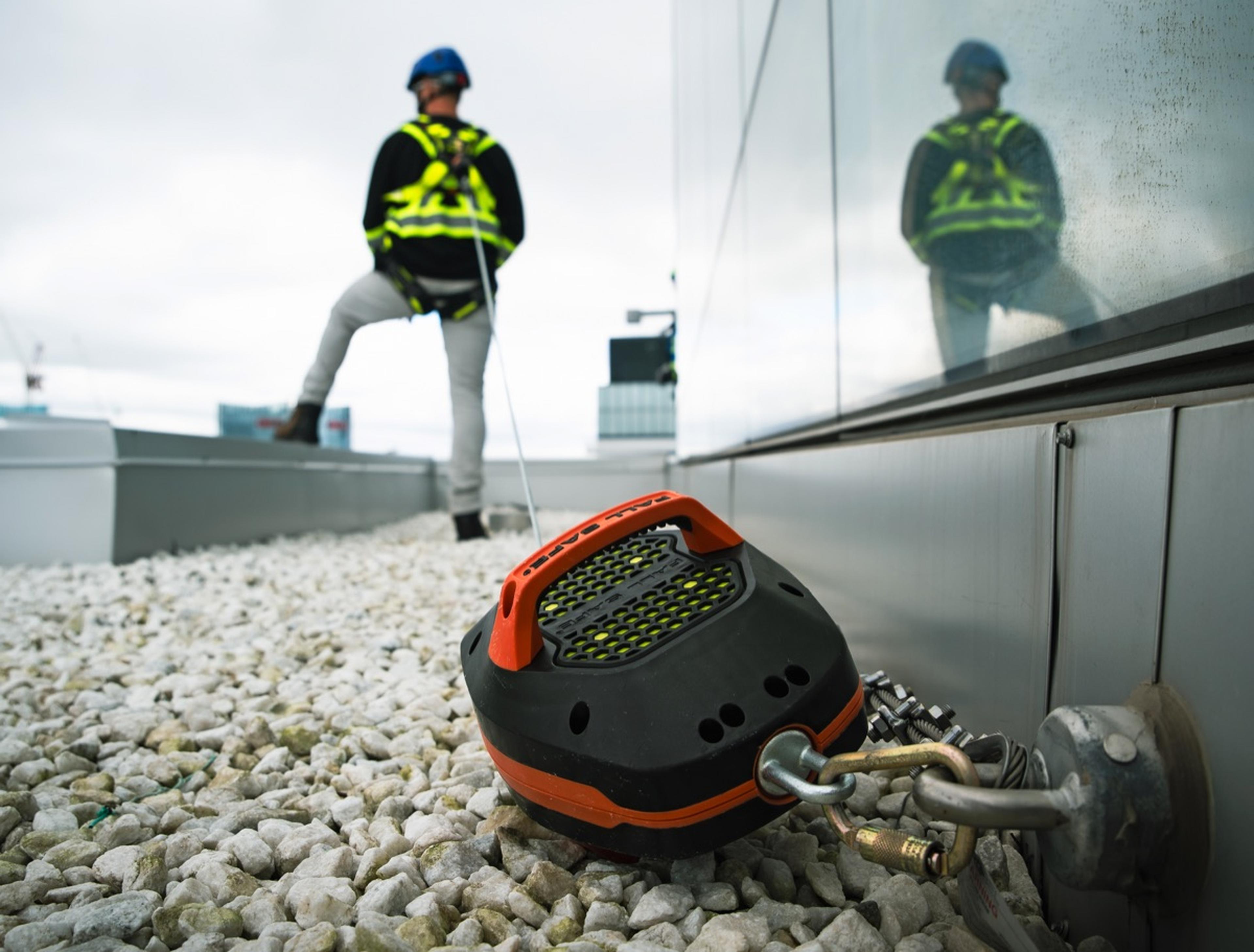
The FLO's integrated handle does more than make the SRL easier to carry between job sites:
At foot level, it lets the SRL roll and move more freely and angles the lifeline up toward the worker.
It helps protect the product labels from wear.
When anchoring overhead, it lets you lift the SRL with one hand and connect the carabiner to the anchor with the other.
Yes, the FLO Class 1 model can be used on an anchorage certified to 1,800 lb by a qualified person. OSHA allows an anchorage rated below 5,000 lb when it's designed, installed and used as part of a complete system with a safety factor of at least two, under the supervision of a qualified person (29 CFR 1926.502(d)(15)). Because the FLO Class 1 keeps maximum arrest force under 900 lb, an 1,800 lb anchorage provides that 2:1 safety factor. This applies to the Class 1 model only.
Tie-off points often change over the course of a project: above the shoulders, below them and at foot level. It's best to anchor as high as possible, but that isn't always an option. The FLO Class 2 is designed for these changing conditions, with leading-edge protection, as little as 4 ft of clearance when anchored overhead and low clearance at foot level. For overhead-only work, the FLO Class 1 adds a maximum arrest force under 900 lb.
Foot-level tie-off calls for an ANSI Z359.14 Class 2 SRL, which is tested for anchorage up to 5 ft below the dorsal D-ring and for leading-edge use. Fall Safe offers Class 2 SRLs in personal and longer-length models. Some, such as the FLO, use a locking system designed to reduce nuisance lock-ups while keeping fall clearance low. Check the foot-level clearance figures in each product's user instructions.